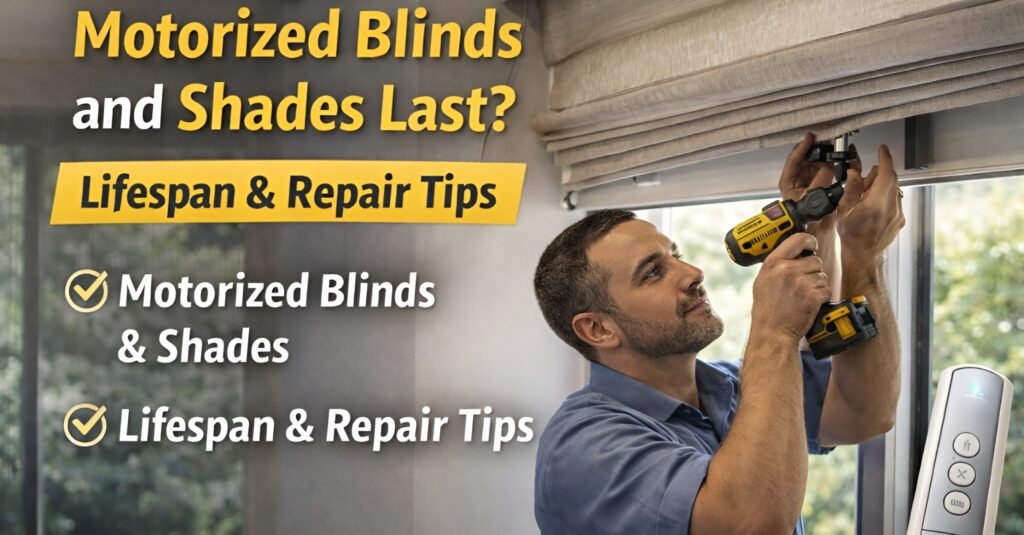
Motorized window coverings are one of those upgrades you don’t think about much, until something stops working. A shade hesitates. A blind doesn’t respond right away. Then suddenly the question comes up: How long are these actually supposed to last? The short answer is. Longer than most people expect. Especially when they’re properly cared for.
Experts help homeowners in West Haven, UT, with smart home upgrades that last. They understand how long motorized blinds and shades typically last and know basic care and repair options. This knowledge helps you protect your investment and avoid replacing items unnecessarily.
Let’s break it down in a practical, no-nonsense way.
Average Lifespan of Motorized Blinds and Shades
Most motorized blinds and shades last between 7 and 15 years. In many cases, they last even longer.
What determines that lifespan isn’t just the product itself. It’s how often the blinds are used. How they’re powered, and how well they’re maintained over time.
Using something every day in a sunny room will cause more wear and tear. Then, only use it occasionally in a guest bedroom. However, modern motors are designed for durability and reliability, not for weakness.
What Affects Longevity the Most?
Several factors play a role in how long your motorized window treatments will perform reliably.
Quality of the System
Not all systems are created equal. Well-built motorized blind and shade systems use durable motors and stable electronics. Its smooth drive components reduce strain during operation.
Usage Frequency
Blinds that open and close multiple times a day will experience more wear. That doesn’t mean frequent use is bad. It just means proper setup matters.
Power Source
Battery-powered and hardwired systems age differently. Batteries eventually need replacement. While wired systems rely more on electrical stability.
Environment
Heat, direct sunlight, dust, and humidity can all affect performance over time. Especially if maintenance is ignored.
Wired vs. Battery-Powered: Does It Matter?
Yes, it can. Wired motorized blinds often last longer overall because they don’t depend on battery cycles. They’re commonly chosen for new builds or major renovations, where wiring can be planned in advance.
Battery-powered systems, on the other hand, are extremely popular for existing homes because they’re easier to install. Their lifespan is still excellent, but regular battery care becomes part of ownership. Neither option is “better” across the board. It depends on your home and expectations.
Signs Your Motorized Blinds May Need Attention
Motorized systems rarely fail all at once. They usually give subtle signals first.
Watch for:
- Slower movement
- Inconsistent response
- Partial opening or closing
- Increased noise during operation
These are often early indicators that motorized blinds and shades maintenance is needed, not that the entire system is failing.
Common Repairs That Extend Lifespan
Many people think that when something goes wrong with motorized blinds, they need to be replaced. In reality, many issues are easily fixable.
Motorized Shade Repair
Motors can sometimes be recalibrated, reset, or replaced without removing the entire shade. Professional motorized shade repair often restores full function quickly.
Battery Replacement for Motorized Blinds
This is one of the most common service needs. As batteries weaken, performance drops. Timely battery replacement for motorized blinds prevents strain on the motor and keeps the movement smooth.
Control or Programming Adjustments
Sometimes the issue isn’t mechanical at all. Remote controls, apps, or smart home integrations may simply need reprogramming.
Addressing small issues early can add years to the life of your system.
Simple Maintenance Tips That Make a Big Difference
Routine care doesn’t take much time, but it pays off.
Basic motorized blinds and shades maintenance includes:
- Gently dusting fabrics and headrails
- Keeping tracks free of debris
- Avoiding manual force on motorized components
- Replacing batteries as recommended
These small habits reduce wear and help motors operate efficiently.
When Replacement Makes Sense
Even the best systems don’t last forever.
Replacement may be the right choice when:
- Motors are no longer supported
- Repairs become frequent and costly
- The system no longer fits your smart home setup
- You’re remodeling and updating window designs
Upgrading doesn’t always mean starting over. Many modern motorized blind and shade systems are compatible with updated controls and automation platforms.
Why Professional Service Matters
DIY fixes can sometimes create bigger problems. Improper handling can strain motors or misalign components. Working with a local expert ensures repairs and upgrades are done correctly. Serving West Haven, UT, we understand local homes, lighting conditions, and smart home trends. Making it more precise and long-lasting.
Conclusion
How long do motorized blinds and shades last? When made from quality materials and set up correctly. Many systems can last more than ten years. To extend their life, it’s important to understand maintenance needs, notice early warning signs, and take care of repairs right away.
If your motorized blinds are not working well, or if you want to upgrade them. Next Level Blindz can help. We serve homeowners in West Haven, UT. We specialize in installing, maintaining, and repairing motorized shades for your home. Contact us today to keep your window treatments functioning smoothly for years to come.
Frequently Asked Questions
How often do motorized blinds and shades need maintenance?
Ans: Most systems don’t need frequent attention. Basic cleaning and occasional checks are usually enough. With battery-powered units needing battery changes every year or two, depending on use.
Can motorized blinds be repaired, or do they usually need to be replaced?
Ans: Many issues can be fixed without replacing the entire system. Motor adjustments, control system resets, or targeted motorized shade repair often restore full function.
What’s the biggest mistake that shortens the lifespan of motorized blinds?
Ans: Ignoring small performance issues. Slow movement or delayed response may seem minor, but addressing them early helps prevent long-term damage.